Fitness
Cold plunges after lifting: what the evidence says about muscle growth
By Kareem Brown
Published · Updated
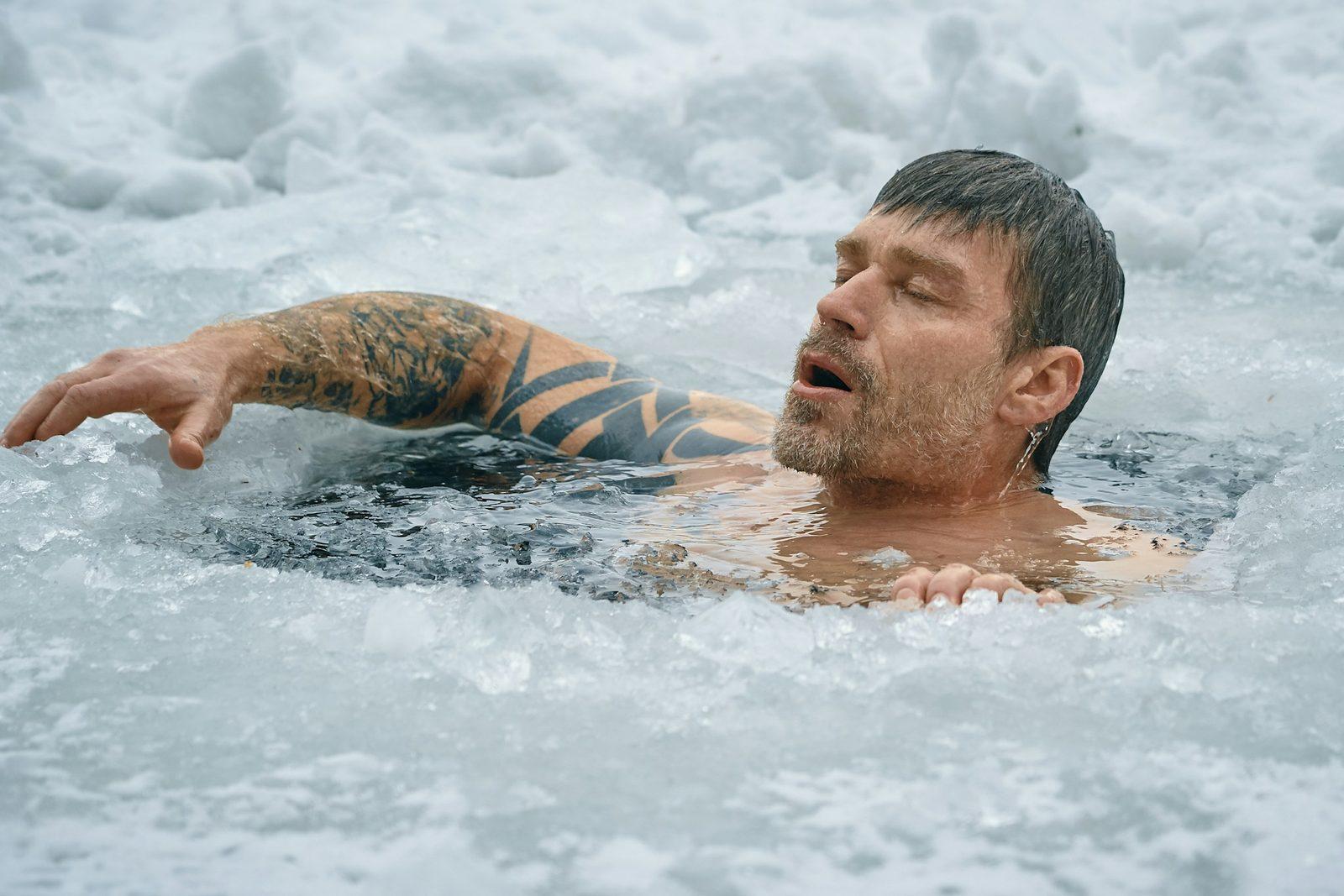
If you finish a lifting session and head straight for the ice bath, you are trading away some muscle growth for faster recovery. That is the consistent finding of the training studies we have.
The trade-off is not always wrong. Here is what the evidence actually shows, and how to decide when a plunge is worth it.
What happens to muscle growth
In a 2015 Journal of Physiology study, men who took a 10-minute cold plunge after each lifting session for 12 weeks gained less strength and muscle than men who recovered actively. Only the active-recovery group grew type II fiber size and added myonuclei.
A 2019 Journal of Applied Physiology trial found the same pattern with more precision. After seven weeks of training, leg press strength improved similarly in both groups, but type II fiber growth was blunted in the cold group.
The likely mechanism: cold immersion after lifting dampens mTOR signaling and satellite cell activity, the molecular machinery that builds new muscle protein. The blunting shows up in biopsies taken hours and days after the session.
Strength is mostly spared, size is not
Across these studies, maximal strength gains held up reasonably well even with regular plunging. What suffered was hypertrophy, the actual increase in muscle size.
So if your main goal is getting stronger rather than bigger, the cost looks smaller. If you are training for visible muscle growth, routine post-lift plunging works against you.
Where cold water still wins
Cold immersion is genuinely good at reducing soreness. A 2026 umbrella review of 14 systematic reviews found the most consistent benefit was lower self-reported muscle soreness in the short term, though the size of that benefit is uncertain.
A second 2026 umbrella review covering 161 studies found improved muscular power and jump performance 24 to 48 hours after hard sessions. Its authors recommend a periodized approach: use cold strategically, not automatically.
That logic fits competition weeks, two-a-day training, or tournaments where tomorrow's performance matters more than this month's growth. Routine daily plunging after every lift is the pattern the evidence argues against.
The bottom line
If building muscle is the priority, keep ice baths away from your lifting sessions by several hours, or save them for rest days. You lose little soreness relief by waiting.
If you are deep in a competition block or just need to perform again tomorrow, plunge away. Recovery now and growth later is a legitimate choice, as long as you know you are making it.
Sources (4)
- Roberts et al. 2015, Journal of Physiology: post-exercise cold water immersion attenuates acute anabolic signalling and long-term adaptations in muscle to strength training
- Fuchs et al. 2019, Journal of Applied Physiology: cold water immersion attenuates anabolic signaling and fiber hypertrophy, but not strength gain, after resistance training
- 2026 umbrella review, Sports Medicine - Open: strategic application of post-exercise cold-water immersion for recovery and adaptation
- 2026 overlap-aware umbrella review, Sports Medicine - Open: cold-water immersion for post-exercise recovery
This is news reporting and not medical advice.