Fitness
What actually drives muscle growth? Tension, effort and volume are different questions
By Monica O’Reilly
Published · Updated
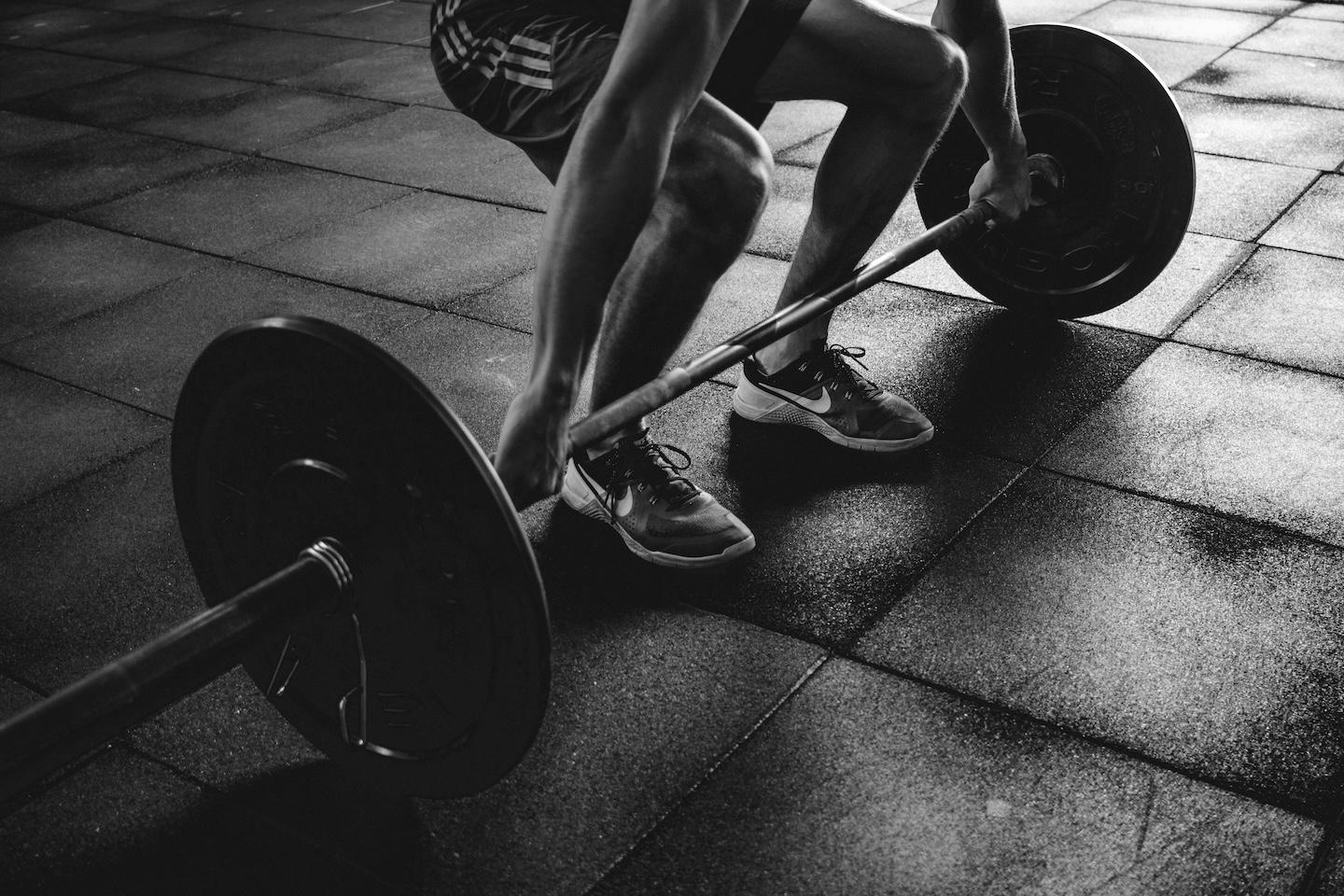
If you chase the pump, measure time under tension and count sore days as progress, the research has uncomfortable news: none of those are proven to drive muscle growth on their own.
We read the meta-analyses and trials behind the usual claims. What follows separates three things that are often blurred together: the biological signal that starts growth, the feelings that correlate with it, and the training choices you actually control.
The signal that starts growth
Mechanical tension on the muscle fibre is the leading mechanistic explanation for how resistance training triggers growth, acting through pathways such as mTORC1 that switch on muscle protein synthesis. A 2019 review in the Journal of Applied Physiology calls mechanical signals the prime candidates, while noting the sensors are still being worked out.
A leading biological mechanism is not the highest-priority programming variable. Tension is not a dial you can set in the gym or established as universally necessary for all forms of hypertrophy. Metabolite buildup might contribute, but the evidence is indirect. Muscle damage is probably not essential at all.
Weekly sets: a dose-response, not an unlimited prescription
Weekly hard sets per muscle are a well-studied programming variable. A 2017 meta-regression of 15 studies associated more weekly sets with more growth. Such an association is not an individual promise or proof that volume is the most important variable.
The Pelland volume and frequency analysis included 67 studies and 2,058 participants. We checked its 2024 preprint full text and its 2025 journal abstract, not the journal full text.
Across the studied range, the pooled model associated more weekly sets with more growth at a declining rate. It did not identify a sharp ceiling. This does not mean unlimited sets keep helping, or that everyone should add sets regardless of recovery.
What the evidence does not support is a fixed rule like 10 to 20 sets: the 2017 paper's 10-plus-sets advantage vanished when one influential study was removed.
Effort: get close to failure, but failure itself is not magic
A 2023 meta-analysis of 15 studies found no clear growth advantage for always training to failure versus stopping short. A 2024 exploratory analysis complicates that: gains rose as sets ended closer to failure, though the authors call the relationship estimated and unsettled.
Light-load results depend on effort. In one eight-week knee-extension trial in 25 untrained men, the 30%-of-1RM failure condition gained more quadriceps size than the non-failure condition; at 80%, gains were similar. That is one muscle, protocol and population, not proof every light-load set must reach failure.
Load, frequency and tempo: different conditional findings
Across 21 studies where all sets went to failure, light and heavy loads produced similar hypertrophy, though heavy loads were better for strength. A 2023 network meta-analysis of 119 studies found all studied resistance-training prescriptions beat no exercise, with only small differences between them for size.
Frequency shows no clear effect once weekly volume is matched, and rep tempos between 0.5 and 8 seconds produced similar growth when sets went to failure. Very slow reps beyond 10 seconds may be worse, but too few studies exist to say firmly.
These are distinct conditions: load comparisons used failure training, frequency comparisons matched volume, and tempo comparisons took sets to failure. They do not make load, frequency and tempo interchangeable with each other.
Rest periods and muscle length are genuinely unsettled
A 2024 Bayesian meta-analysis of nine randomised studies found muscle grows across a wide range of rest intervals, with a small, uncertain benefit for rests over 60 seconds. The practical read: avoid rests so short that your volume load collapses; beyond that, differences look small.
The newer syntheses address different comparisons: long versus short partials, regional muscle length, and full versus partial range of motion. The lengthened-partials trial is another specific comparison, not a test of every form of lengthened training.
The newer reviews do not settle a universal advantage for lengthened training. Comparisons and muscles differ; muscle length, range of motion and exercise selection are hard to separate.
The pump, soreness and hormone spikes are proxies
A 2025 review finds missing causal evidence for metabolites and cell swelling. That is absence of proof in the studies done, not proof these signals do nothing. It does not establish that the pump or soreness invariably tracks hard training.
One 12-week trial in 49 trained men found no link between acute hormone rises and gains. That is a scoped no-correlation finding, not proof hormone responses can never matter.
Damage is a different endpoint from soreness. In a 10-week trial, muscle damage and the protein-synthesis response were highest in week one but unrelated to growth; growth tracked accumulated protein synthesis only after damage faded. This study did not test soreness as a cause.
The multiplier: protein
Across 49 randomised trials, protein supplementation (example: Optimum Nutrition Gold Standard 100% Whey) added a modest 0.30 kg of fat-free mass over weeks of training, with no added benefit above about 1.6 g per kg of body weight per day. That figure comes from supplemented participants in trials, so treat it as an observed plateau, not a universal prescription.
What this means for your training
Our practical interpretation is to track repeatable hard-set volume and effort rather than chase a pump or soreness score. Pick loads you can control, distribute sets across sessions you can sustain, and rest enough to maintain useful work. These are applications of the evidence, not proof one variable outranks every other one.
That is an interpretation, not a verdict. Most trials ran 8 to 12 weeks in young adults, several were men only, and some conclusions rest on abstracts or preprint figures. Where the science is unsettled, we have said so rather than selling you certainty.
Product links in this article are affiliate links. If you buy through them we may earn a commission at no extra cost to you.
Sources (19)
- Wackerhage et al. 2019, Journal of Applied Physiology: mechanisms of exercise-induced muscle hypertrophy (review)
- Schoenfeld, Ogborn, Krieger 2017, Journal of Sports Sciences: dose-response between weekly set volume and muscle gain (meta-regression, 15 studies)
- Pelland et al. 2025, Sports Medicine: volume and frequency meta-analysis (journal abstract checked, not journal full text)
- Pelland et al. 2024 preprint: volume and frequency meta-analysis (preprint full text checked)
- Refalo et al. 2023, Sports Medicine: failure vs non-failure training (meta-analysis, 15 studies)
- Robinson et al. 2024, Sports Medicine: exploratory meta-regression of estimated reps in reserve
- Lasevicius et al. 2022, Journal of Strength and Conditioning Research: failure and load (25 untrained men, 8 weeks)
- Schoenfeld et al. 2017, Journal of Strength and Conditioning Research: low vs high loads to failure (21 studies)
- Morton et al. 2016, Journal of Applied Physiology: load, hormones and hypertrophy (49 trained men, 12 weeks)
- Currier et al. 2023, British Journal of Sports Medicine: network meta-analysis of prescriptions (119 studies, 3,364 participants)
- Schoenfeld, Grgic, Krieger 2019, Journal of Sports Sciences: frequency with volume equated (25 studies)
- Schoenfeld, Ogborn, Krieger 2015, Sports Medicine: rep duration 0.5-8 s to failure (8 studies)
- Singer et al. 2024, Frontiers in Sports and Active Living: Bayesian meta-analysis of rest intervals (9 randomised studies)
- Wolf et al. 2023, International Journal of Strength and Conditioning: Bayesian meta-analysis of range of motion
- Muscle hypertrophy from partial repetition at long vs. short muscle lengths (2026)
- Lengthened-partials resistance-training trial
- Van Every et al. 2025, Journal of Sport and Health Science: review of pump, metabolite and hormone claims
- Morton et al. 2018, British Journal of Sports Medicine: protein supplementation (49 RCTs, 1,863 participants)
- Damas et al. 2016, The Journal of Physiology: muscle damage and protein synthesis over 10 weeks
This is news reporting and not medical advice.